
How India can Turn Solar Power Loss into Opportunity
Of late, India has been strengthening non-fossil energy capacity by rapidly expanding solar power to meet clean energy targets. However, there are some roadblocks in utilizing the entire the solar power produced.
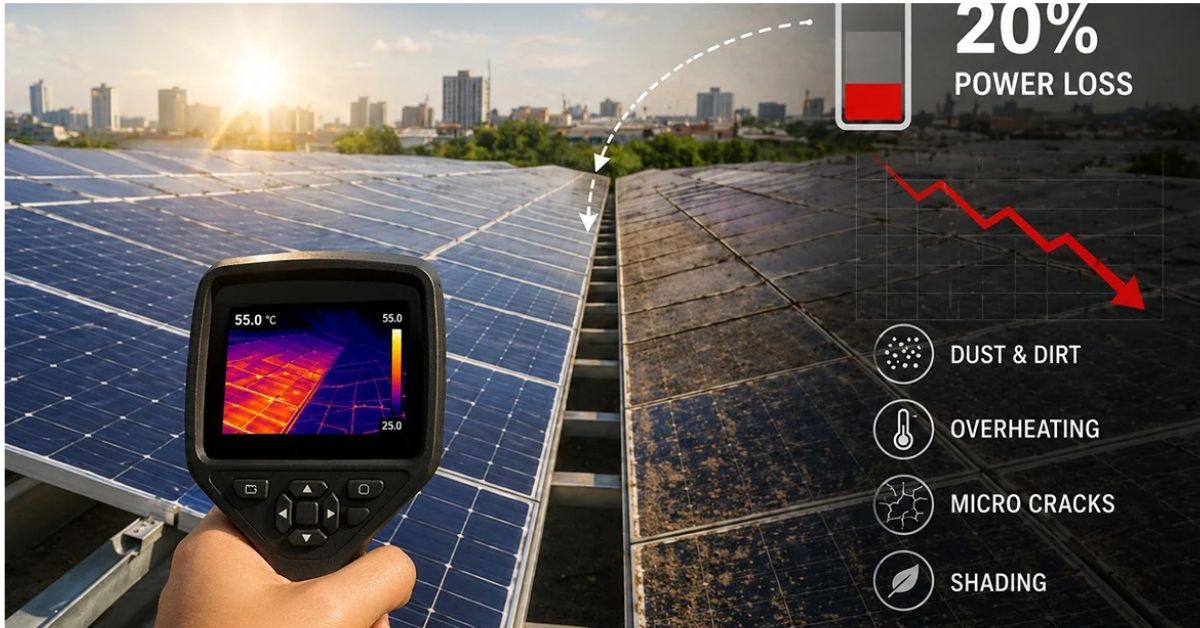
According to a recent report by the Centre for Research on Energy and Clean Air (CREA), nearly 1.8 billion units of renewable electricity went unused in July and August, with approximately 4.2% of solar generation unable to be absorbed by the grid during the period. The report has raised debate for the need to strengthen transmission infrastructure, improve grid management and develop energy storage solutions.
However, this challenge also presents an opportunity. With the right investments, technology and policy measures, India can transform renewable energy curtailment into a catalyst for building a more efficient, reliable and sustainable power system.
Solar Power emerges as key player in energy transition
India has made great progress in expanding the renewable energy capacity, and solar power has vital source of country’s energy transition.
But, generating electricity is only one part of the equation. Solar power production varies throughout the day, while electricity demand continues into the evening and night. When generation exceeds the grid’s ability to transmit, balance or consume electricity, some available solar power must be curtailed.
This is not simply a generation problem; it is a system-wide challenge involving transmission, storage, forecasting, grid flexibility and coordination.
Minimizing solar power losses will therefore require India to develop an integrated energy ecosystem in which generation, transmission, storage and consumption work together seamlessly.
India needs to strengthen transmission infrastructure
One of the most important steps towards minimizing solar curtailment is accelerating the development of transmission infrastructure.
Large solar parks and renewable energy projects are often located in regions with abundant sunlight and available land. However, the electricity generated at these locations must travel across long distances to reach industrial centers, commercial establishments and households. If transmission corridors lack sufficient capacity, renewable energy can remain underutilized even when demand exists elsewhere.
India can address this challenge by accelerating the construction and modernization of high-voltage transmission lines, substations and inter-state transmission corridors. Better connectivity between renewable energy-rich states and major consumption centers would allow surplus solar electricity to flow more efficiently across the country.
Advanced congestion-management technologies and improved transmission planning can further reduce bottlenecks. Equally important is ensuring that transmission infrastructure is planned alongside new renewable energy capacity rather than being developed only after generation projects become operational.
A well-connected national grid is essential to ensuring that solar power generated in one region can meet demand in another.
Ramping up energy storage to reduce solar power loss
Energy storage can play a transformative role in reducing solar power losses. Solar generation is typically strongest during daylight hours, whereas electricity demand may peak in the evening. Battery energy storage systems (BESS) can capture surplus solar electricity during periods of high generation and release it when demand rises or solar output declines.
This approach offers several benefits. It reduces the need to curtail excess generation, improves the utilization of existing solar assets, supports peak-demand management and strengthens grid reliability.
India can encourage the deployment of utility-scale battery storage through clear regulatory frameworks, appropriate market mechanisms, transparent procurement models and supportive investment policies. Storage requirements should be assessed according to local grid conditions, renewable energy penetration and the duration of the supply-demand gap.
Pumped-storage hydropower can complement battery systems, particularly where longer-duration storage is required and suitable sites are available.
Together, these technologies can help transform intermittent solar generation into a more flexible and dependable source of electricity.
Focusing on developing modern power infrastructure
A modern power system needs more than transmission lines and storage facilities. It also requires real-time information, accurate forecasting and advanced control systems.
Artificial intelligence, digital monitoring, automated substations and advanced energy management systems can improve the visibility and responsiveness of electricity networks. Better solar generation forecasting would help grid operators anticipate fluctuations and prepare alternative arrangements before congestion occurs.
Smart-grid technologies can also improve the coordination of power flows, identify network constraints and support faster operational decisions.
At the distribution level, smart meters and digital demand-management systems can help utilities understand consumption patterns more accurately. This information can support better demand planning and encourage electricity use during periods of abundant solar generation.
By aligning consumption with renewable generation, India can reduce avoidable curtailment while improving the productivity of its existing energy infrastructure.
Maintaining grid stability
As renewable energy accounts for a growing share of electricity generation, maintaining grid stability becomes increasingly important.
Conventional synchronous generators provide physical inertia and other grid-supporting characteristics. As the generation mix changes, the power system must adopt appropriate technologies and operational practices to maintain frequency, voltage and system strength.
India can advance this transition by establishing suitable technical standards for grid-forming inverters, battery energy storage, reactive power support and other grid-stabilizing technologies, based on system needs. Minimum requirements for grid inertia and system strength should also be clearly defined where necessary.
Strengthening these capabilities would enable the grid to accommodate higher levels of renewable energy without compromising reliability.
India’s power system operates across state and national networks, making institutional coordination essential.
Renewable energy curtailment can arise when generation forecasts, transmission availability, power scheduling and demand projections are not adequately aligned. Better coordination among state load dispatch centers, regional and national grid operators, transmission utilities, distribution companies and renewable energy developers can help address these challenges.
Long-term system planning should identify transmission constraints before they become critical. Real-time information sharing can help operators redirect available electricity, manage congestion and respond quickly to changing weather and demand conditions.
More effective power markets and improved access to inter-state electricity trading can also help surplus renewable energy reach areas where it is needed, subject to transmission availability and operational requirements.
A coordinated national approach would reduce avoidable losses and improve the overall efficiency of India’s electricity network.
Encourage flexible demand and distributed solar
Reducing solar curtailment does not depend exclusively on large infrastructure projects. Distributed energy resources can also contribute to a more balanced power system.
Rooftop solar, local battery storage, commercial energy management systems and microgrids can improve the use of electricity closer to where it is generated and consumed.
Industrial and commercial consumers can be encouraged to shift suitable electricity-intensive activities to daytime hours through time-of-day tariffs and other demand-response mechanisms. Distribution companies can also explore incentives for consumers who help balance local electricity demand.
Agricultural solar pumping, cold storage, electric vehicle charging and industrial heating are potential areas where flexible demand could support better utilization of daytime solar generation.
These measures can reduce pressure on the wider grid while creating opportunities for businesses and consumers to benefit from cleaner electricity.
Create the right investment and regulatory environment
Infrastructure development and technology adoption must be supported by predictable policies and viable business models.
Investors need clarity on battery storage regulations, grid connection requirements, transmission access, electricity market participation and compensation arrangements. Renewable energy developers also benefit from transparent curtailment procedures and better visibility into grid availability.
Policymakers can accelerate progress by coordinating renewable energy tenders with transmission and storage planning, encouraging private investment in energy storage and strengthening incentives for grid-modernization projects.
Performance monitoring is equally important. Regular reporting on renewable energy curtailment, transmission congestion, storage utilization and grid reliability would help identify persistent bottlenecks and measure the impact of corrective measures.
The objective should be to ensure that investments in clean energy generation deliver the greatest possible benefit to the economy and consumers.
The role of domestic manufacturing in India’s clean energy transition
India’s renewable energy ambitions create opportunities not only for power generation but also for domestic manufacturing, technology development and industrial growth.
A robust domestic solar manufacturing ecosystem can support the country’s energy security while reducing exposure to global supply-chain disruptions. At the same time, the expansion of transmission infrastructure, battery storage, power electronics and smart-grid technologies can create demand for a wider range of electrical and energy-management products.
Manufacturers, utilities, technology providers and policymakers must work together to ensure that the development of generation capacity is matched by investments in the infrastructure needed to integrate it.
For India’s solar industry, the next phase of growth will be defined not only by how much capacity can be installed, but also by how efficiently that capacity can deliver electricity to the grid.